Water and energy for everyone · Volume two
26 Following instructions in an emergency
P3 – Protection in emergencies too
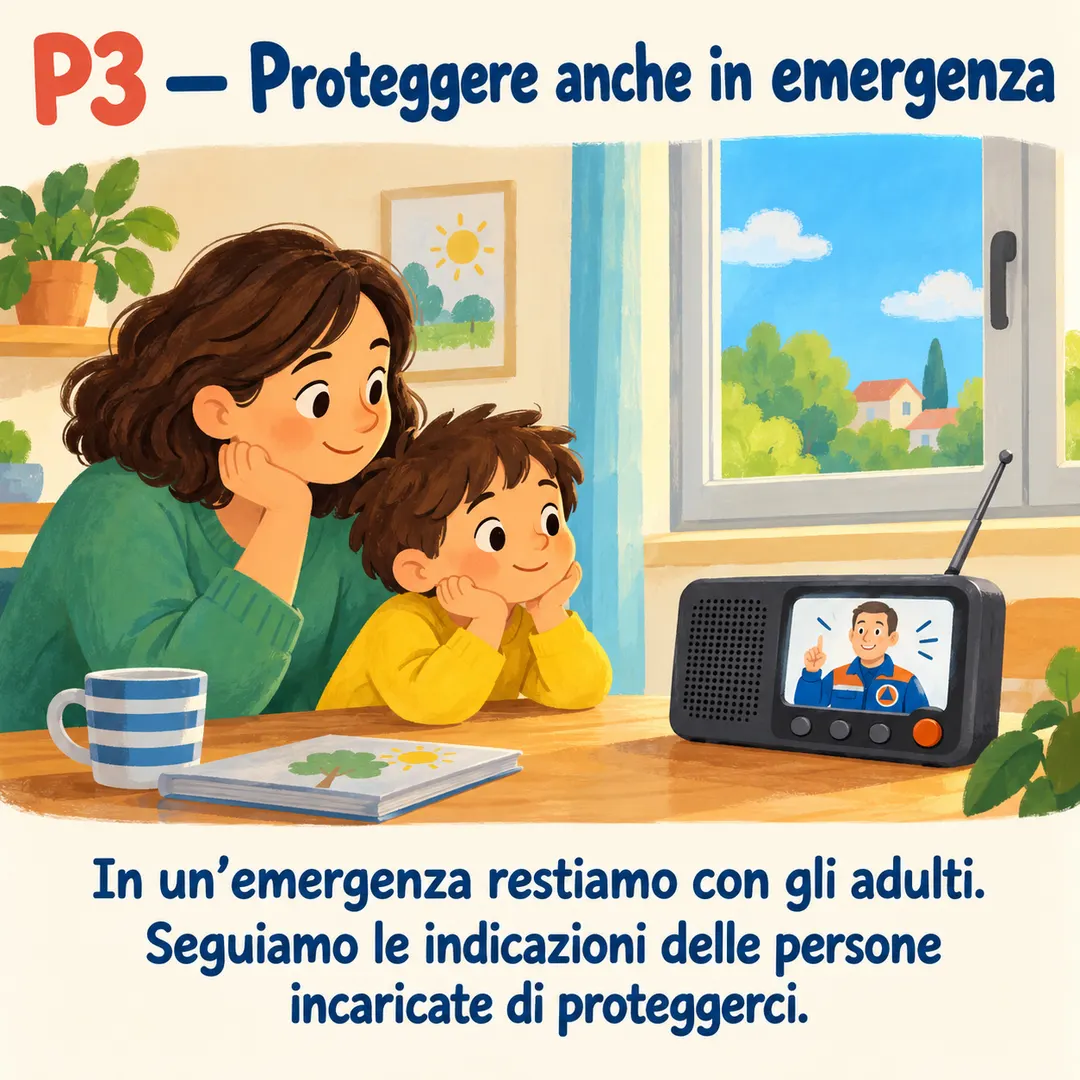
In an emergency, we stay with the adults. We follow the instructions of the people whose job is to protect us.
Look, connect the ideas and tell the story
- Stay with the adults
- Instructions
- The place indicated
Words and symbols to help you tell the story. Sizes and distances are not realistic.
If there is an emergency, we stay with the adults. We listen to the people whose job is to protect us. We follow their instructions. The instructions can change depending on what has happened.
Who helps us know what to do?
26 Let’s discover together
If there is an emergency, adults listen to instructions from the people in charge. A child stays with the adult looking after them. They can say how they feel and ask questions.
They do not decide on their own where to go or what to take. The instructions can change with the situation. Being prepared also means knowing who guides us and how we get reliable information. In the book, the family is calm and together. Knowing our role can help us understand what to do.
- The adult looking after us
- Official instructions
- Actions depend on the situation
A model to help us follow the idea. The colours and shapes are not measurements. Where arrows appear, they show the path described in the text.
26 Let’s draw and tell the story
Little helpers for my drawing
- Stay with the adults
- Instructions
- The place indicated
Look at these symbols. Then make your own drawing in the empty space.
Choose a simple sentence with an adult: ‘I stay with you and we listen to the instructions.’ Draw the family receiving an official message. The child points to the adult looking after them.
The adult explains that no emergency is happening now. Do not use sirens, pretend accidents or escape games. Talk about who helps us and how to ask a question when we have not understood.

The story in my drawing
The adult can write down something the child says here.
26 For adults
Look, connect the ideas and tell the story
- Stay with the adults
- Instructions
- The place indicated
The symbols help you read the diagram. The text explains the choices and limits.
Following instructions in an emergency
Measures are decided by the relevant authorities and health services according to the event. The scene shows people listening to communications, not a universal instruction to stay indoors. The book does not replace local emergency plans.
The page concerns preparedness and roles, not instructions to apply to a specific accident. Sheltering indoors, evacuation and other measures depend on decisions by the relevant authorities. Do not add advice about health measures or medicines to take independently.
For young children, a calm family scene is preferable to a dramatic simulation. The adult can check official local channels and explain where to find relevant information. A message received through social media is not automatically an official instruction. The answer sought from the child concerns being accompanied: staying with the adult and listening together.
The question and one possible answer
Who helps us know what to do?
The adult looking after the child follows the relevant authorities’ instructions with them.
Welcome gestures and unfinished answers too. Return to just one part of the picture if the connection is not yet clear.
Sources for further reading F4 F5 · Final section of the book
Explore with an adult · F4 International Atomic Energy Agency
https://www.iaea.org/publications/10885/safety-of-nuclear-power-plants-design

Explore with an adult · F5 World Health Organization
https://www.who.int/news-room/fact-sheets/detail/ionizing-radiation-and-health-effects
