Volume II · Scene 13 of 30
A little more water
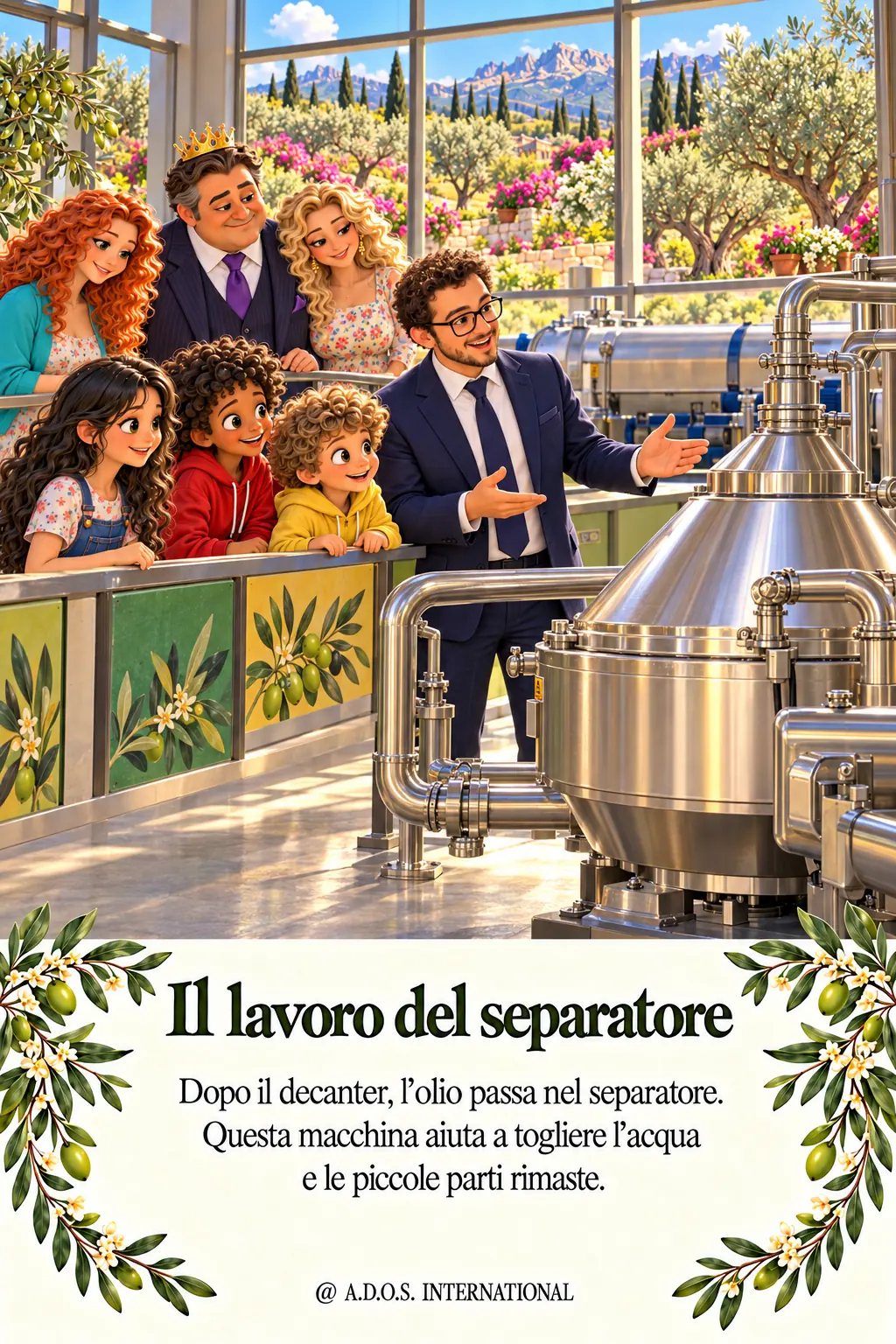
The separator at work
After the decanter, the oil passes through the separator.
This machine helps remove water and the small particles that remain.
@ A.D.O.S. INTERNATIONALThe story
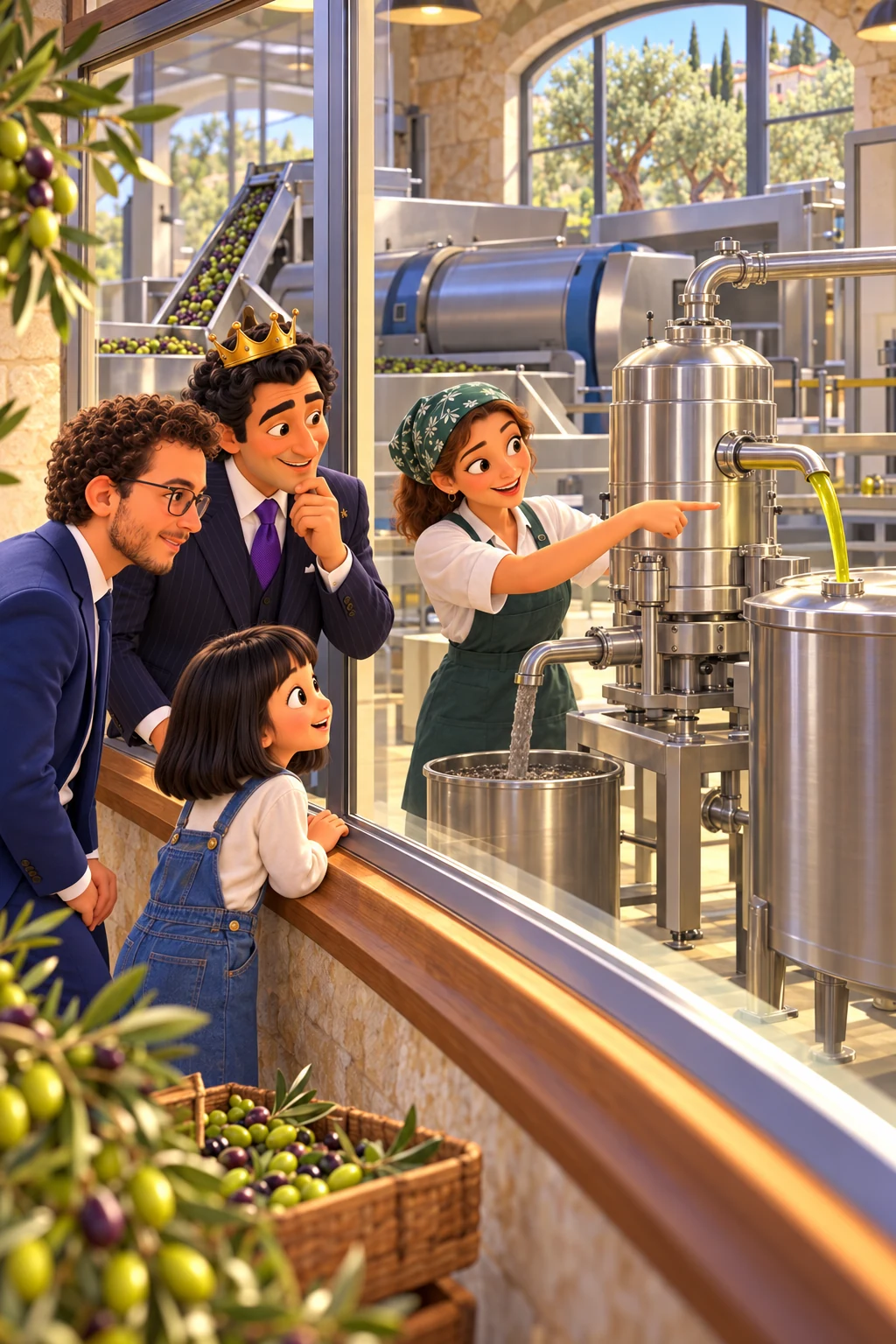
The liquid on its way to becoming oil is not necessarily ready for a bottle. The woman in charge shows the next step on the route chosen for the visit. Another separation helps remove water and particles that remain. Neri explains that a centrifuge suited to this task can be used. Leo recognises the word they have already met. “It spins, but it does another little part of the work.” Rumo marks the two stages on the map. Ada does not draw them as exact copies: equipment and steps can differ between mills. Sami follows the oil arrow, now closer to the tank. Each explanation fits into the picture, without making the separated material disappear. Then Curiosone opens a picture of a traditional olive mill. “In the past, people also used millstones, a press and a collecting tank. The oil could rise above the water and was collected from the surface.” The group follows this different route in the section Yesterday and today.
Let’s talk about it
Why might another separation be needed after the first one?
One possible answer
To remove water and particles still present in the oil. The equipment and steps depend on the processing system.
A little activity
Our notebook — Find the first and second separations on the map. You can describe them with two gestures, without using liquids or machines.