Volume II · Scene 12 of 30
Each part has its own path
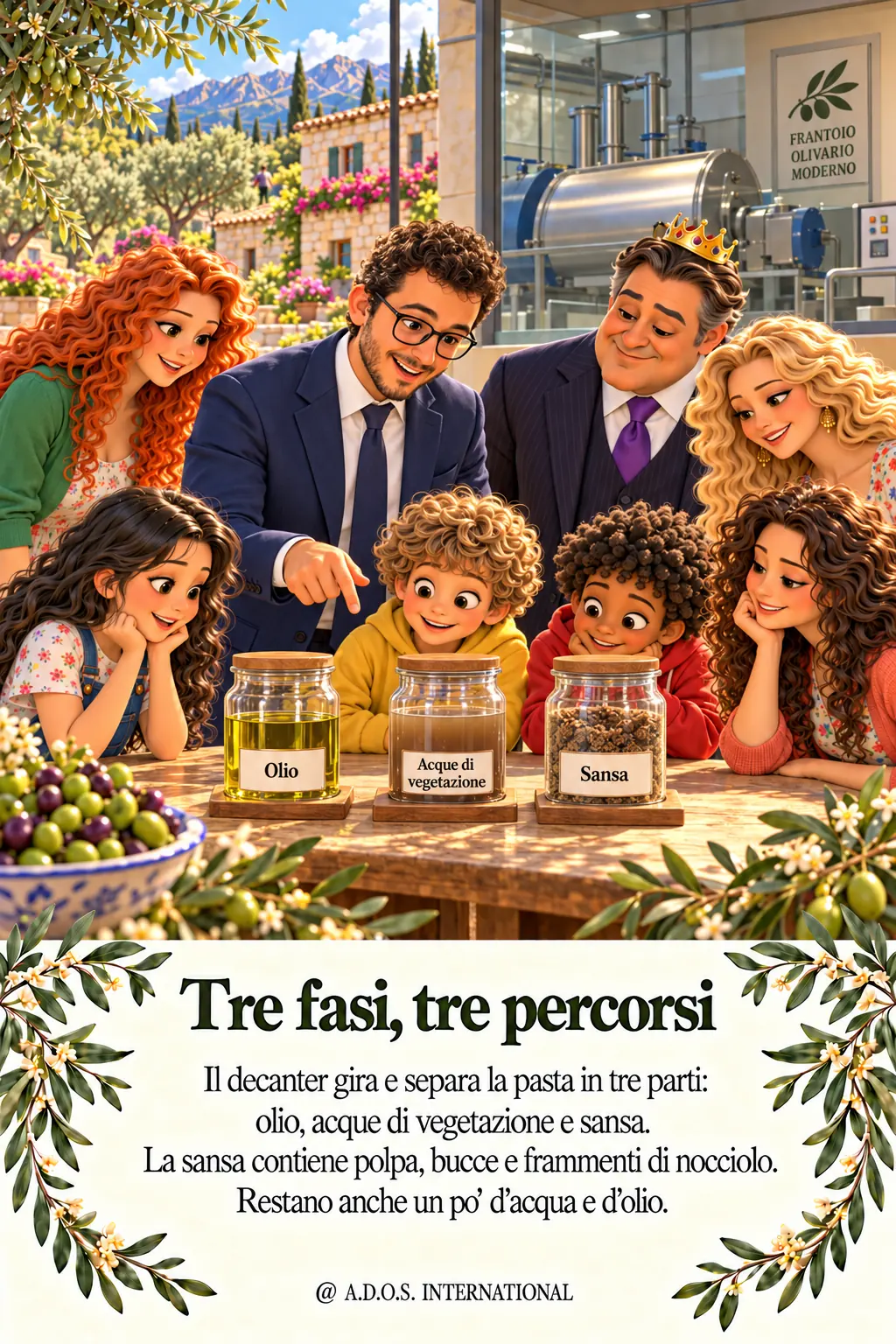
Three phases, three paths
The decanter spins and separates the paste into three parts: oil, vegetation water and pomace.
The pomace contains flesh, skins and fragments of stone.
Some water and oil remain too.
4. Oil
5. Vegetation water
6. Pomace
7. MODERN OLIVE MILL
@ A.D.O.S. INTERNATIONALThe story
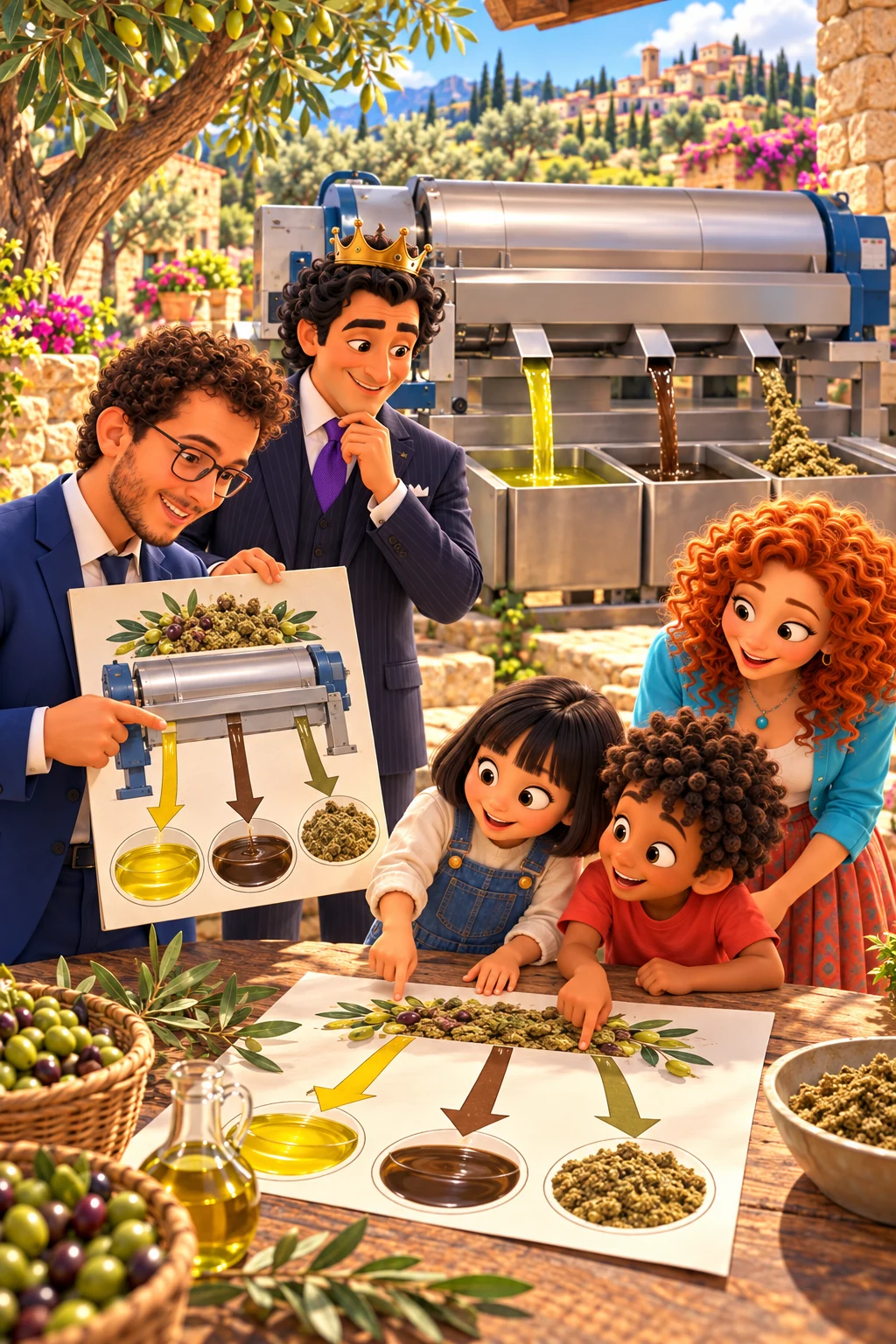
Giulio points to the drawing. ‘In the system with three outlets that we are describing, the paste is separated into oil, water from the olives called vegetation water, and pomace.’
‘What is pomace?’ Ada asks. ‘It contains parts of the flesh, skin and stone. Some water and a little oil remain in it too. It is not completely dry.’
‘And the water?’ asks Sami. ‘There is already water inside the olives. It separates during processing. The adults collect it and take care of where it goes.’
Rumo follows the three paths with his finger. ‘No arrow disappears.
We need to know where every part goes.’
‘What is at the other outlet?’ asks Sami. The woman in charge points to the pomace in the diagram. It contains parts of the flesh and stone, together with an amount of water that depends on the system. ‘In some mills, water also leaves along a separate path.’ Curiosone adds a name. ‘The water already inside the olives is called vegetation water. It is different from the water used to wash them.’ In two-phase systems, much of this water stays in the wet pomace. In three-phase systems, oil, the watery part and pomace are separated. A little oil may remain in the pomace too. Ada uses different colours for oil and residues. Rumo realises that the bottle drawing tells only part of the work.
‘What is left must have a proper path too,’ he says. Tila nods.
The adults manage all the materials, not just the oil that will be used at the table. Leo leaves an arrow on the paper that still needs explaining. They will return to it.
Let’s talk about it
Is only oil left after separation?
One possible answer
No. Vegetation water and solid parts remain, forming pomace with some oil that was not extracted. Water and pomace may leave together or follow separate paths, depending on the mill.
A little activity
Our notebook — Find oil, water and pomace in the diagram. In the two-phase drawing, water and pomace share a path. In the other drawing, they are separate. An adult helps you follow the arrows.