Volume I · Scene 24 of 30
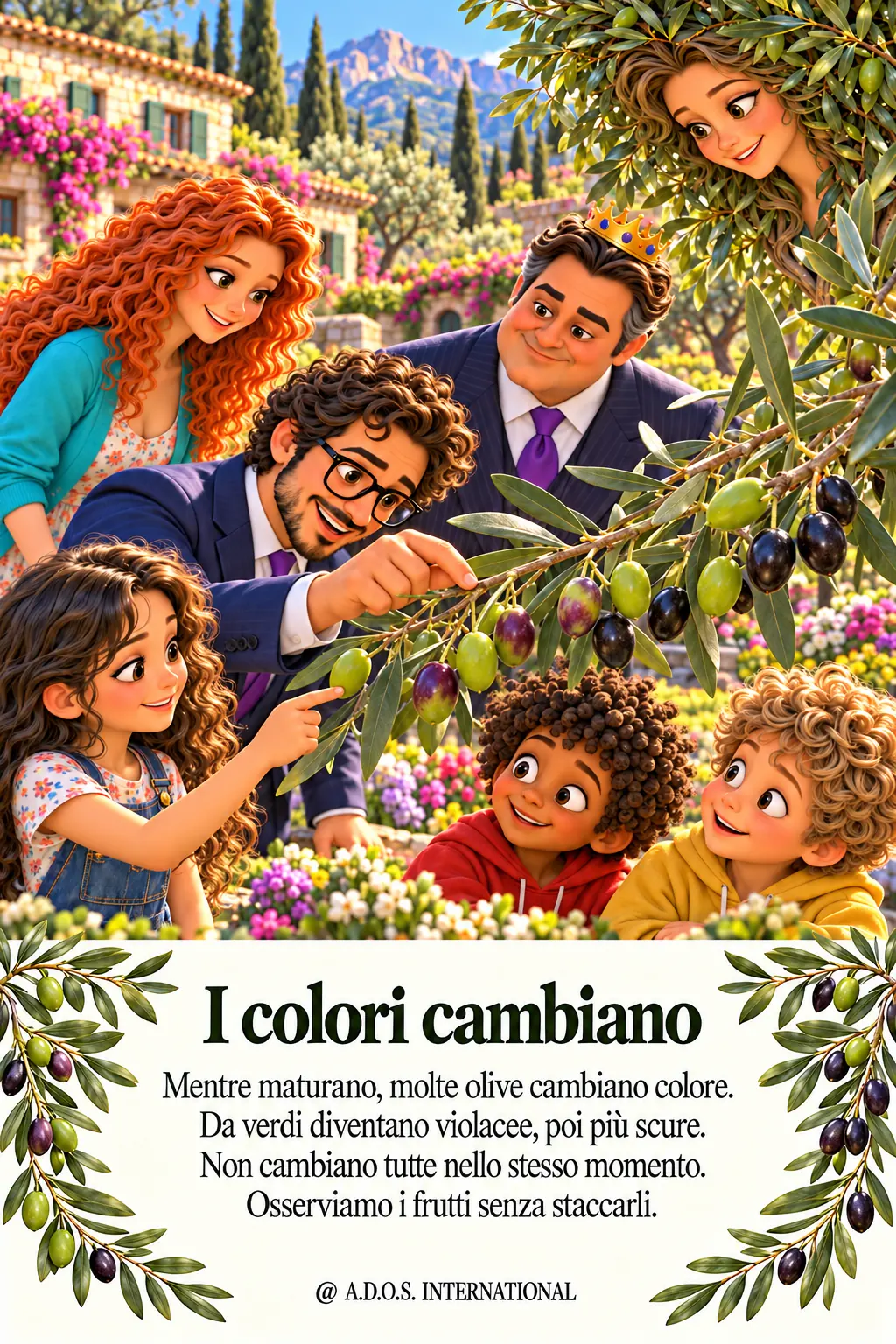
The colours change
The colours change
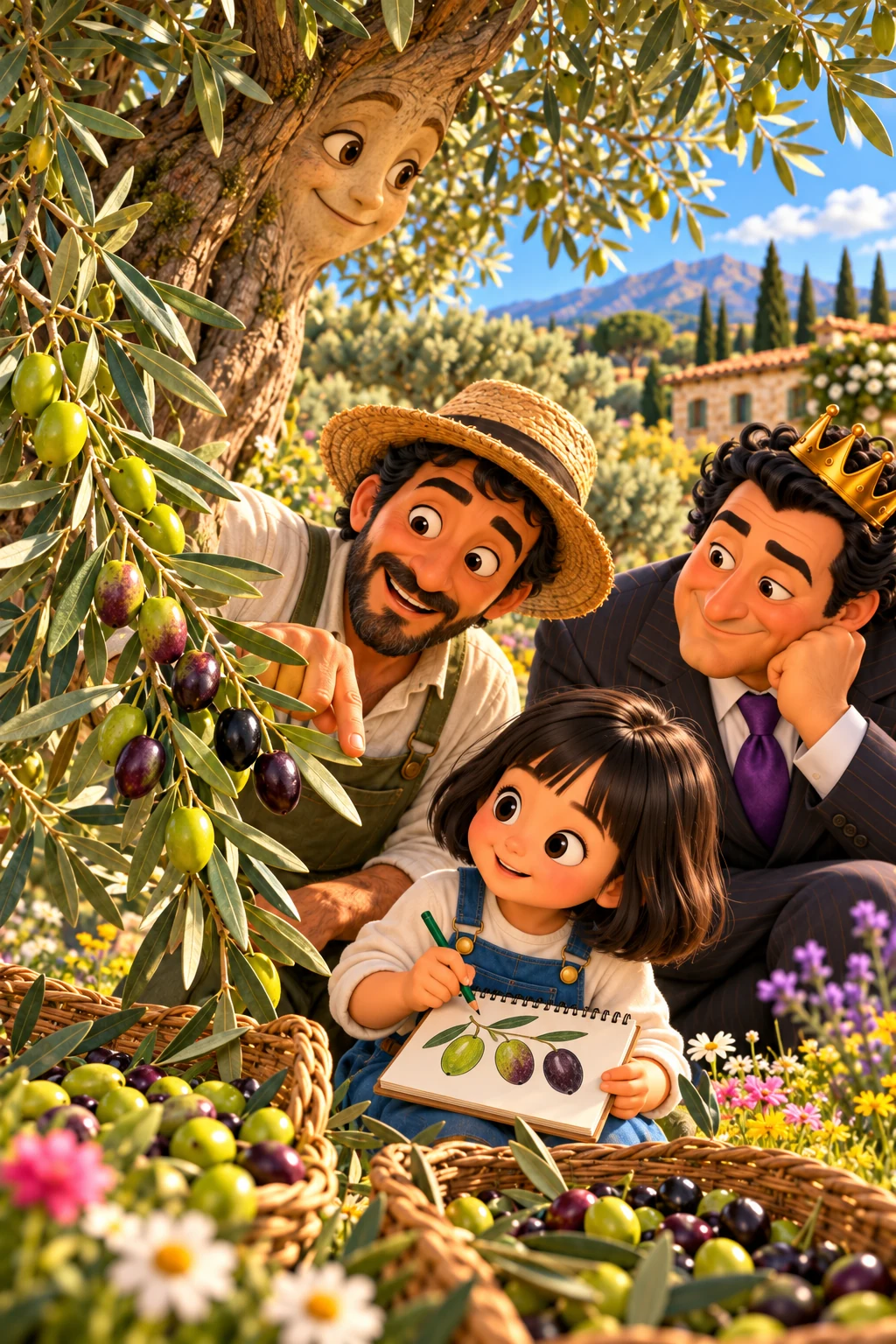
As they ripen, many olives change colour.
From green, they turn purplish, then darker.
They do not all change at the same time.
We observe the fruit without picking it.
@ A.D.O.S. INTERNATIONALThe story
On the next visit, some olives have changed colour. Ada finds different greens and shades of purple. Leo looks for the darkest olive. ‘Is that always the best one?’ The grower explains that olive trees are not all the same. Different varieties can have different fruits and timings. Their colours change in different ways too. ‘We look at several things, not just how dark an olive is.’
Curiosone listens to the grower and continues the explanation. ‘Fruitiness means the aromas we notice with our nose. To look for green fruitiness, we often harvest early, when the olives are still green or just starting to change colour. The oil may have stronger green aromas and be more bitter or peppery. Riper olives can make good oil too. They must be healthy, fresh and processed well.’ Sami prepares a page of coloured patches. Rumo would like to arrange them in a perfect row, all identical. Ada leaves some differences. The drawing should help us see what is really there. The olives on the tree have not been told to change colour all at once.
Let’s talk about it
Do all olives change colour at the same time?
One possible answer
No. The change also depends on the variety and ripening. Colour alone is not enough to choose when to harvest. An early harvest can be chosen to look for green fruitiness. Ripe fruitiness is a positive characteristic too: ripe does not mean spoiled.
A little activity
Our notebook — Find three shades in the picture and try to draw them. You do not need to decide which colour is prettiest or best.